How an LMS helps the teams helping Sri Lanka heal
How an LMS helps NGOs, government units and community groups train volunteers, keep updates in one place and stay coordinated during a crisis.

Balanita team Analysts, developers and support engineers
Published
Updated
2 min read
This week has been heavy for many communities in Sri Lanka. While people work together to stay safe and support one another, many teams are struggling to coordinate information, guide volunteers and keep everyone connected.
If you are part of an NGO, a government unit or a local community group working to help others, an LMS can make that work a little easier. You are doing meaningful work, and the right tools should support it.
Why does a response team need an LMS?
In moments like this, clarity and connection save time and protect people. An LMS gives a team one place to share instructions, train new helpers and keep communication steady.
An LMS can help you:
- Share critical updates quickly
- Guide volunteers with step-by-step instructions
- Onboard new helpers smoothly
- Keep your entire team aligned, even from different locations
- Reduce confusion during fast-moving situations
The same tasks sit at the heart of any training programme, which is why the questions in how to choose an LMS for your organisation apply to a response team too.
How does an LMS help a team during a crisis?
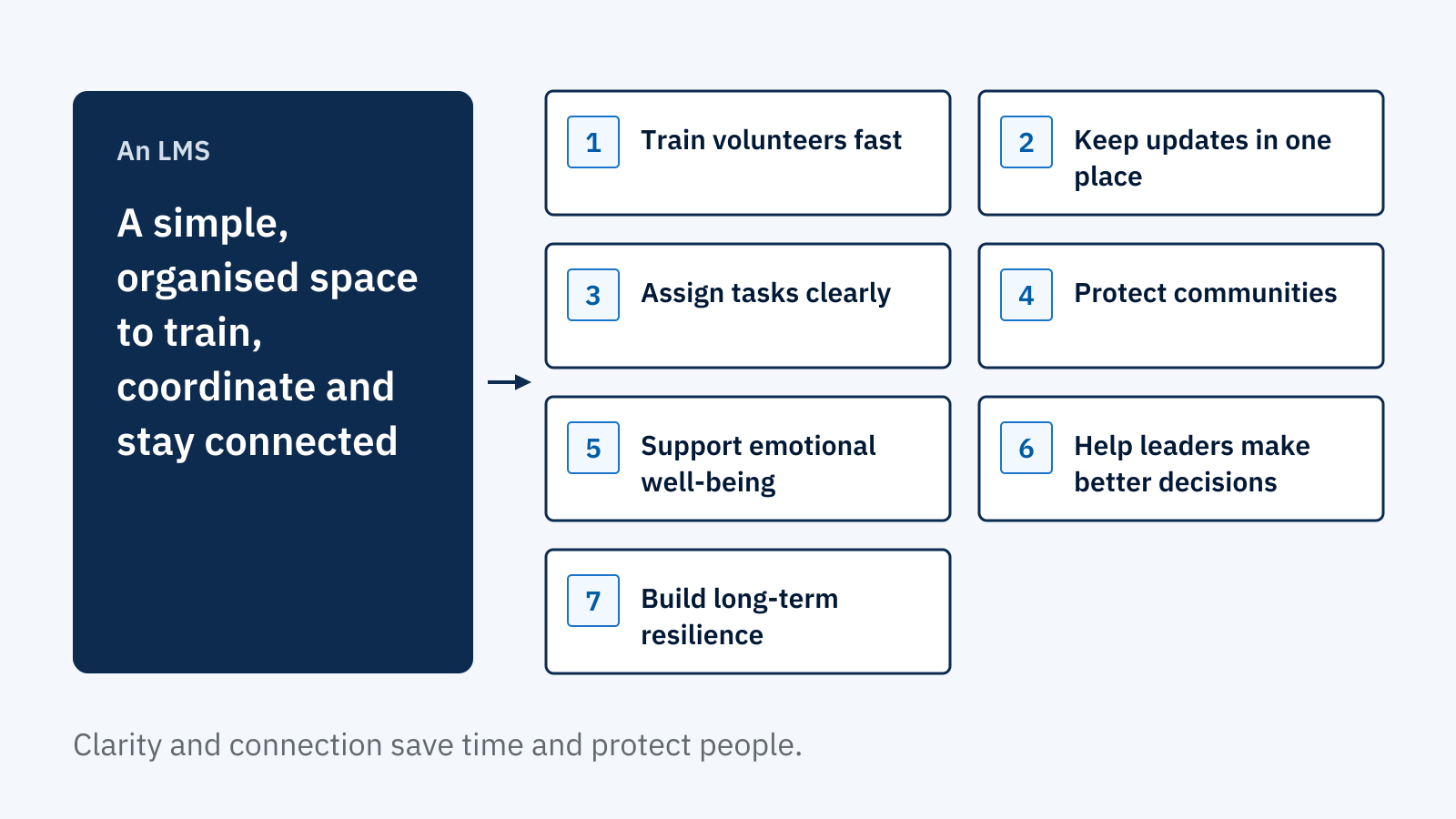
It gives your team a simple, organised space to train, coordinate and stay connected when everything else feels difficult. Here are seven ways it helps.
1. Train volunteers fast
Share short guides, safety steps and quick videos so new volunteers can start helping immediately. No repeated explanations.
2. Keep updates in one place
Post announcements, location changes and important files in a central hub. Your team will not get lost in scattered WhatsApp messages.
3. Assign tasks clearly
Show who is responsible for what, who is on duty and who has completed mandatory training. This reduces confusion in the field.
4. Protect communities
When every volunteer follows the same procedures, work becomes safer and more reliable for the people you are supporting.
5. Support emotional well-being
Include short lessons or tips on managing stress and staying grounded during tough days. Small guidance makes a big difference.
6. Help leaders make better decisions
See who is trained, which areas need support and how operations are progressing. This clarity speeds up your response.
7. Build long-term resilience
Your training, updates and lessons stay stored for future emergencies. Your team becomes stronger each time.
How do you get an LMS ready for your team?
Start with what your team needs to do, then choose and set up the platform around it. Balanita Launch runs that as one project: discovery, a written requirements summary, one platform recommendation, then build, testing, training and handover.
If you want to talk through your team’s situation first, book a free 30-minute discovery call. You are not alone.
Frequently asked questions
How does an LMS help volunteers during a crisis?
Short guides, safety steps and quick videos let new volunteers start helping straight away, without repeated explanations. When every volunteer follows the same procedures, the work is safer and more reliable for the people being supported.
Why use an LMS instead of WhatsApp groups?
An LMS keeps announcements, location changes and important files in one central hub, so the team does not get lost in scattered messages. It also shows who is responsible for what, who is on duty and who has completed mandatory training.

Written by
Balanita team
Balanita's analysts, developers and support engineers choose, build and run learning platforms for corporate and professional training teams.
Balanita on LinkedIn